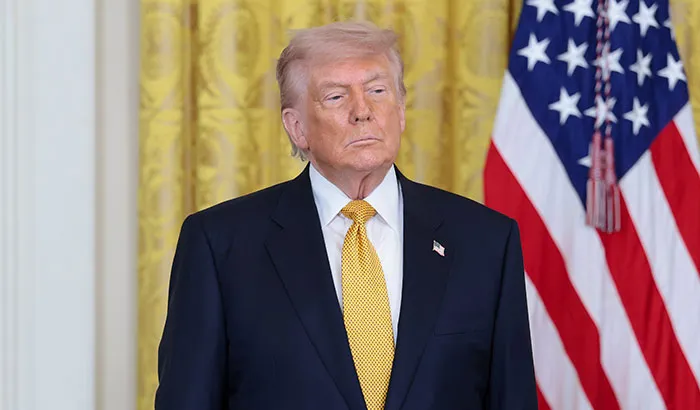
Donald Trump promised Americans a “patriotic” alternative to big tech when he unveiled the T1 smartphone in June 2025, however, the product reportedly failed to live up to expectations.
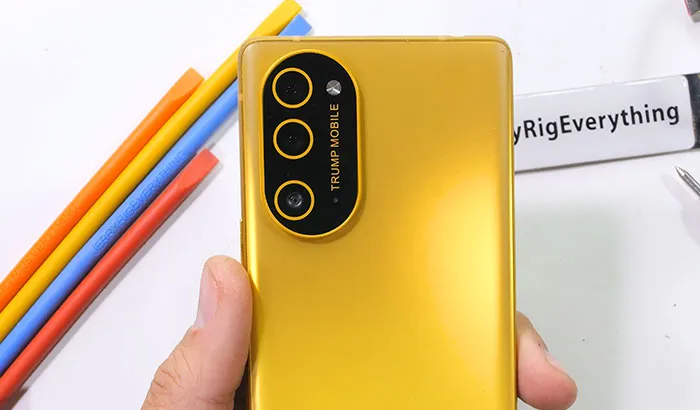
On Wednesday, October 28, Zack Nelson, a popular YouTuber known for gadget teardowns and durability tests, put the $499 handset through its paces.
Highlights
-
Zack Nelson compared Trump’s $499 T1 phone with the HTC U24 Pro, uncovering striking similarities in their designs and internal components.
-
The handset’s flawed American flag design also led Nelson to question Trump’s patriotic branding.
-
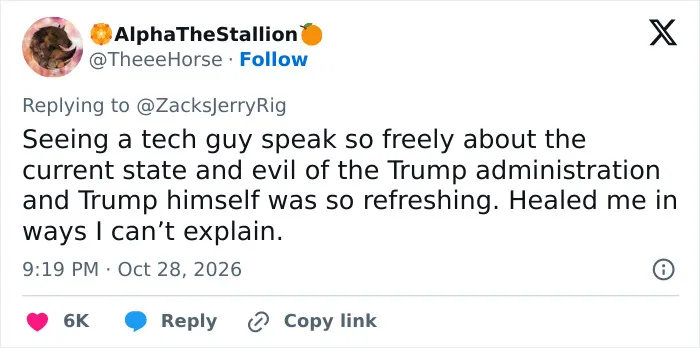
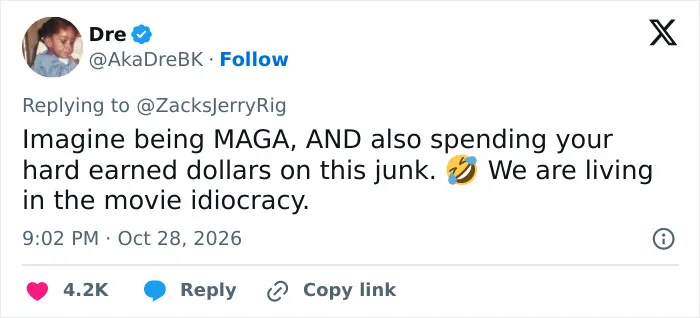
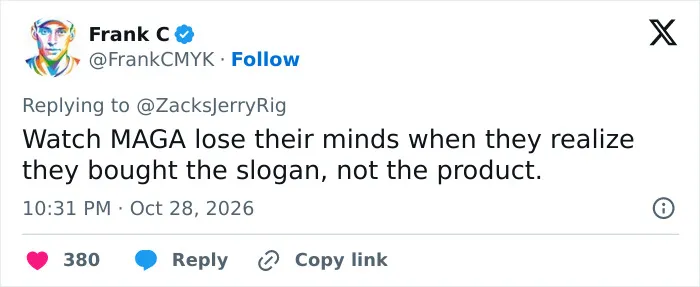
His political commentary resonated with viewers, with some describing the review as refreshing.
He also compared it with a Taiwanese model released in 2024, explaining that the president’s offering looked “extremely suspicious.”
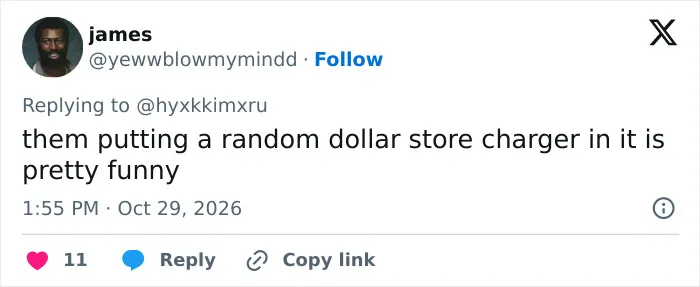
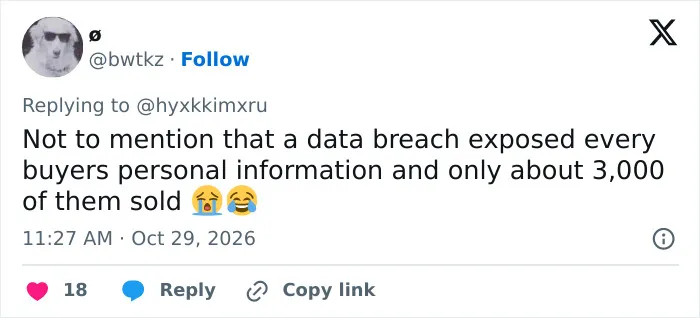
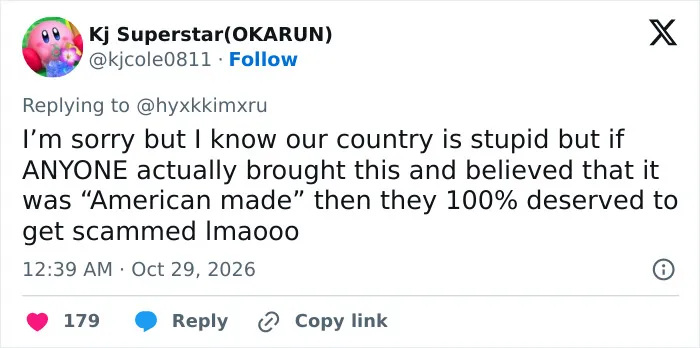
“Phone so bad it makes you remember the Epstein Files,” one netizen joked.
A popular tech reviewer tested Trump’s T1 phone and claimed the president misled consumers
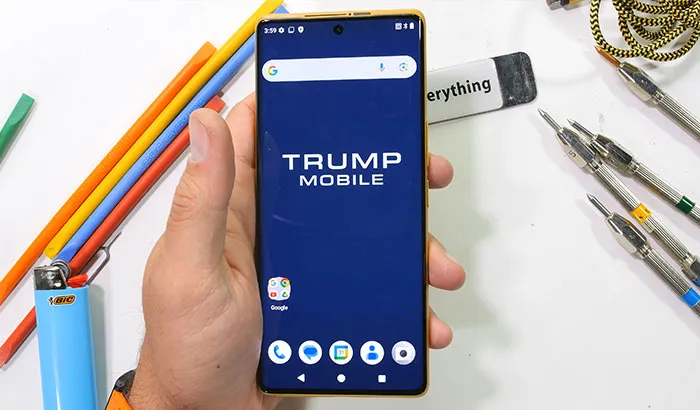
Nelson’s review video of the T1 had amassed 9 million views as of this writing.
Right from the start, the reviewer placed the handset alongside the HTC U24 Pro, a phone he already owned.
He pointed out that the two devices matched in overall size, the contours of their angled metal frames, the placement of the power and volume buttons, the notification lights, the USB port, the headphone jack, and the microSD card slot.
Scratch tests yielded similar results, with the first visible marks appearing at level six on a Mohs hardness pick, a tool used to assess a material’s scratch resistance.
More pronounced grooves emerged at level seven.
Nelson then opened up both handsets, revealing that their interiors were identical too, down to the number and placement of screws, the motherboard, and the battery.
The most striking moment, however, came when the reviewer swapped the motherboards between the two devices.
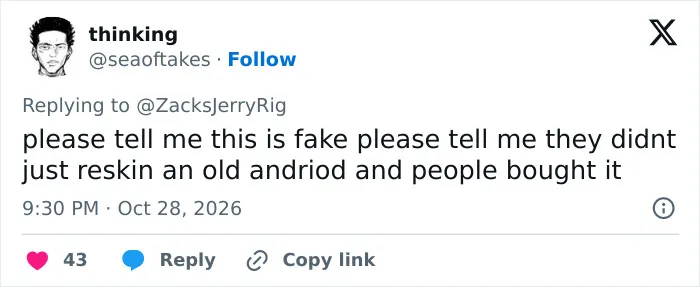
Both phones booted up immediately, further suggesting that they were built on the same platform and sourced from the same manufacturer.
Nelson also questioned the president’s claims of patriotism by highlighting a design flaw in the T1’s American flag.
The flag printed on the phone featured fewer stripes than the actual U.S. flag
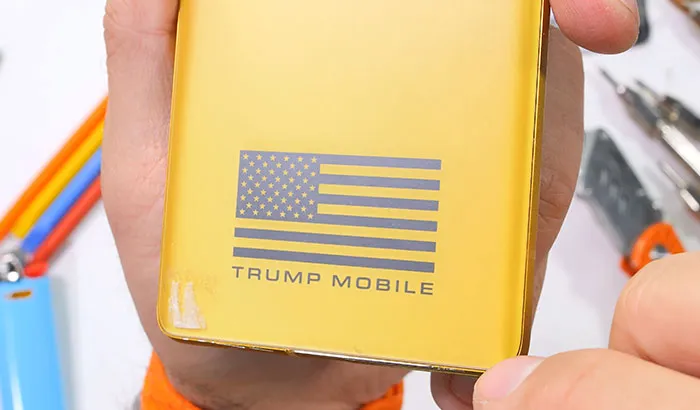
Pointing out the discrepancy, Nelson sarcastically suggested that the Trump Mobile branding might account for the missing stripes, “one red, one white.”

He then raised another concern about the image, citing Section 8(i) of Title 4 of the U.S. Code, which states that the American flag “should never be used for advertising purposes in any manner whatsoever.”
Nelson, meanwhile, did not hold back from calling attention to Trump’s past legal troubles and alleged lies during the video.
Zack Nelson took aim at Trump over democracy, the Epstein Files, and his felony convictions
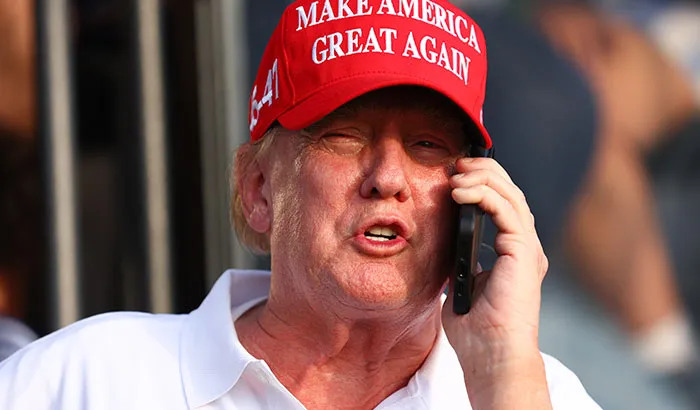
Nelson’s first personal jab at Trump came while he was explaining why he had taken so long to review the device.
The figure referred to a New York jury finding Trump guilty on 34 felony counts of falsifying business records in May 2024.
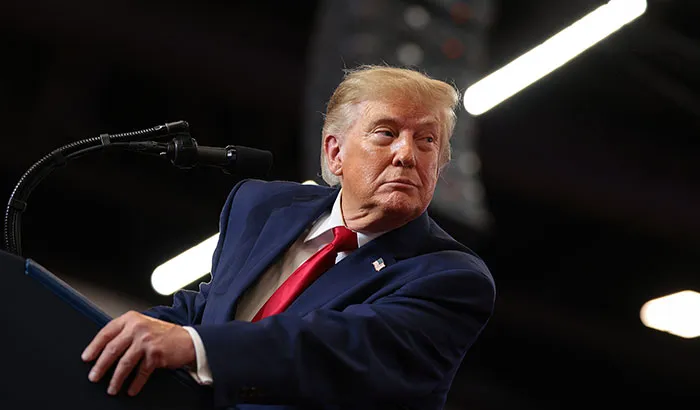
Later, during the scratch test, Nelson noted that the T1 had sustained marks at levels six and seven, quipping that those were among Trump’s favorite numbers.
The reviewer subsequently broadened his criticism to Trump’s political record, accusing him of making promises without following through. He argued that the president was still complaining about America’s problems after several hundred days in office, despite having promised to fix them on day one.
“We gotta start judging the guy on his actions and not his promises,” Nelson said



PakarPBN
A Private Blog Network (PBN) is a collection of websites that are controlled by a single individual or organization and used primarily to build backlinks to a “money site” in order to influence its ranking in search engines such as Google. The core idea behind a PBN is based on the importance of backlinks in Google’s ranking algorithm. Since Google views backlinks as signals of authority and trust, some website owners attempt to artificially create these signals through a controlled network of sites.
In a typical PBN setup, the owner acquires expired or aged domains that already have existing authority, backlinks, and history. These domains are rebuilt with new content and hosted separately, often using different IP addresses, hosting providers, themes, and ownership details to make them appear unrelated. Within the content published on these sites, links are strategically placed that point to the main website the owner wants to rank higher. By doing this, the owner attempts to pass link equity (also known as “link juice”) from the PBN sites to the target website.
The purpose of a PBN is to give the impression that the target website is naturally earning links from multiple independent sources. If done effectively, this can temporarily improve keyword rankings, increase organic visibility, and drive more traffic from search results.
Comments are closed, but trackbacks and pingbacks are open.